Treatment Guide
Sofwave in Korea — visitor handbook
Synchronous parallel-beam ultrasound lifting on the SUPERB platform — what it is, how visitors plan it, and how it compares with the older MFU systems.
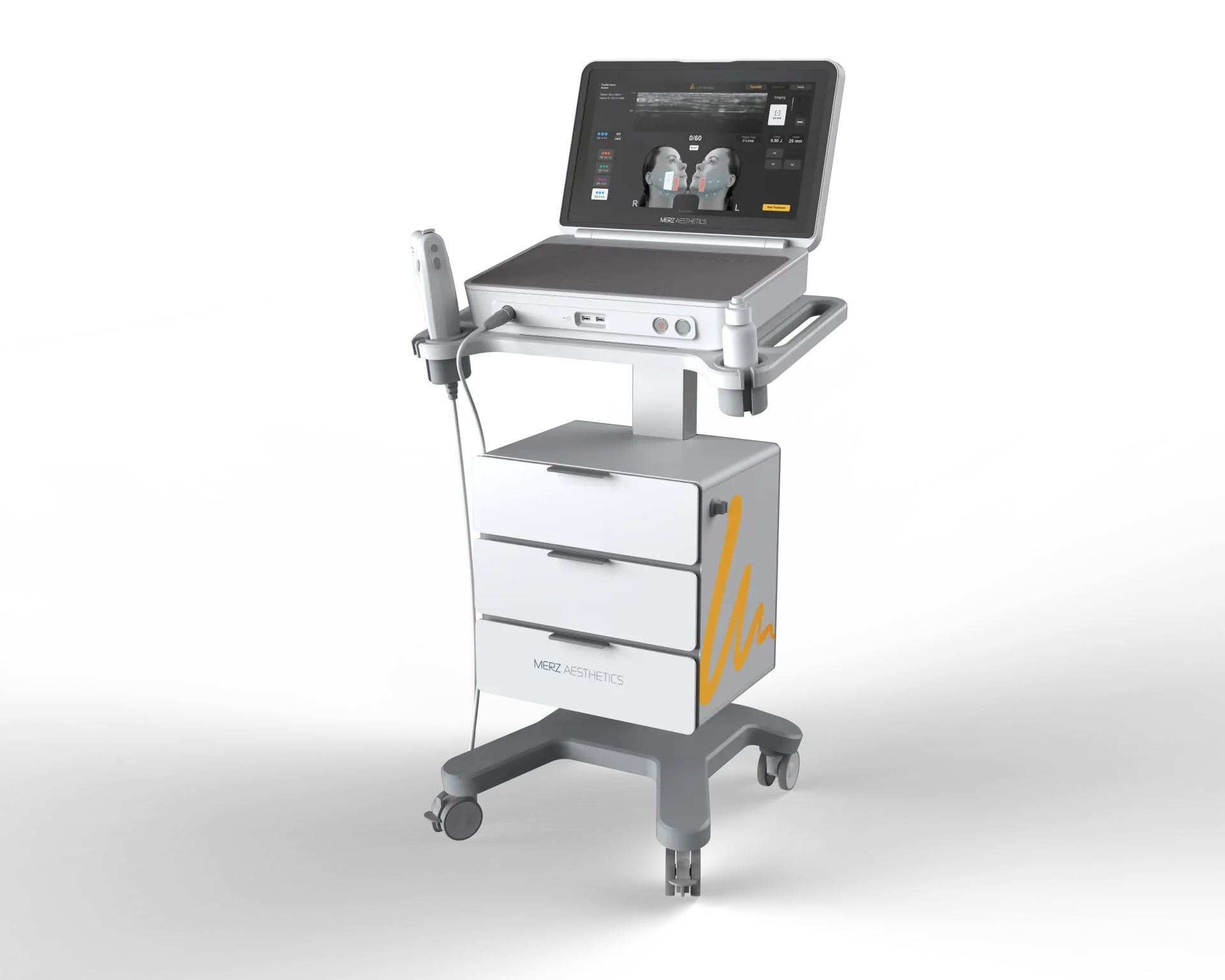
Sofwave is a synchronous-ultrasound platform manufactured by Sofwave Medical, using SUPERB (Synchronous Ultrasound Parallel Beam) technology to deliver seven parallel beams of ultrasound energy at a controlled mid-dermal depth (1.5 mm). The platform stimulates collagen and elastin via thermal coagulation in the upper dermis, with a treatment pattern that differs structurally from the discrete-coagulation-point approach of older MFU systems like Ultherapy. Sofwave entered the Korean market more recently than Ultherapy or Thermage and has been adopted aggressively by Gangnam premium clinics over the past two to three years. For an international visitor, Sofwave is among the most comfortable lifting platforms available — short session, low pain, and minimal downtime. This page covers the platform from a visitor's angle. For deeper clinic-level coverage, see the Korea-wide Sofwave archive or the Myeongdong archive.
What SUPERB technology actually is
The SUPERB technology delivers seven parallel ultrasound beams at the 1.5 mm dermal depth in a synchronised pattern, creating a series of cylindrical thermal coagulation zones across the treatment area. Compared with the discrete-point approach of microfocused ultrasound (Ultherapy), the parallel-beam pattern covers more dermal area per shot and at a more uniform depth. The mid-dermal target is shallower than Ultherapy's deepest 4.5 mm depth, which means Sofwave is calibrated more for skin-quality and surface-laxity improvement than for SMAS-level structural lifting. This is a meaningful clinical distinction — Sofwave and Ultherapy are not direct substitutes, they are calibrated for somewhat different concerns.
Visitor scheduling — among the most schedulable platforms
A full-face Sofwave session takes 30 to 45 minutes, with 30 minutes of topical anaesthesia beforehand. Session length is among the shortest in the lifting category, which makes Sofwave practical for visitors with constrained Korea schedules. The conventional pattern: arrive Friday, consultation Friday afternoon, treatment Saturday (90 minutes total including prep), observe Sunday, fly home Monday. Mild redness for 12 to 24 hours is common; visible swelling is uncommon. Most visitors report the platform as more comfortable than Ultherapy or Thermage, with sensation peaking around the perioral and chin zones. Many visitors return to social activities, including dinner, the same evening.
When Sofwave is the right choice
Sofwave is well-calibrated for visitors with mild to moderate skin laxity, surface texture concerns, and early-stage signs of ageing where SMAS-level structural intervention is not yet warranted. Patients in the 30 to 45 age range with skin-quality concerns often respond well. Patients with significant volume loss or substantial structural ptosis — the territory where deeper SMAS work or even surgical intervention would otherwise be considered — are generally better suited to Ultherapy PRIME or to a combined platform protocol. The senior physician should advise based on consultation findings rather than the platform a clinic happens to be promoting.
Combining Sofwave with other platforms
Sofwave combines well with regenerative work (exosomes, growth factors) on the same trip, sequenced 48 to 72 hours apart. Combining Sofwave with Thermage FLX — different mechanisms (RF vs ultrasound), different depths — can be additive when sequenced across two trips or with several days between sessions on the same trip. Combining Sofwave with Ultherapy is generally not done in a single trip; the two ultrasound platforms are calibrated for somewhat different depths and are usually staged across separate visits. The senior physician's call.
Pricing context
A full-face Sofwave session in Gangnam typically lands in the KRW 1,500,000–3,000,000 range. The price is somewhat lower than Ultherapy PRIME at most clinics, reflecting both the shorter session time and the fact that Sofwave is positioned as a complementary platform rather than the structural lifting workhorse. Myeongdong and regional clinics often run lower price-points. The pricing reference has current figures with USD, CNY, JPY, and EUR conversions. Confirm written pricing and named treatment areas before booking.
Frequently asked questions
How does Sofwave differ from Ultherapy?
Sofwave uses synchronous parallel-beam ultrasound at 1.5 mm depth (upper dermis); Ultherapy uses microfocused ultrasound at 1.5, 3.0, and 4.5 mm depths (including SMAS). Sofwave is calibrated for skin-quality and surface laxity; Ultherapy reaches deeper structural layers.
How long does a session take?
30 to 45 minutes for the procedure itself, with 30 minutes of topical anaesthesia beforehand. Total clinic time is 75 to 90 minutes.
Is it painful?
Most visitors describe Sofwave as more comfortable than Ultherapy or Thermage. There is sensation — warm pulses across the treatment area — but it is generally tolerable without oral analgesia. The perioral and chin zones are the most sensitive.
When do results appear?
Initial improvements at four to six weeks; full effect at three months. Photo-documentation at week 0, week 4, and week 12 is the standard review pattern.
Is Sofwave a substitute for a face-lift?
No. Sofwave delivers gradual mid-dermal collagen-mediated tightening, not surgical structural repositioning. Visitors with significant ptosis or substantial excess tissue should consult on surgical or deeper non-surgical options.
What does a session cost?
KRW 1,500,000 to 3,000,000 in Gangnam. The pricing reference has current figures with USD, CNY, JPY, and EUR conversions.